Reiki 101丨The history and development of Reiki
Follow joya ╳ Magical Every Day

The following is an excerpt from the book “The Healing Touch” by William Lee Rand
The subject “I” is William Lee Rand
Please indicate the source when reprinting
Please do not modify it at will
Translation By joya
History of Reiki
There have been many attempts to explain the history of Reiki, however, unfortunately, much of the history in the past has been based on myths, and even attempts to verify specific Reiki modalities have in most cases lacked accurate information.
Recognizing the need for a factual history of Reiki, I spent 25 years researching this information based on written records and interviews with people closely associated with Reiki. The result I got was the reiki described below, a history based on corroborated facts.
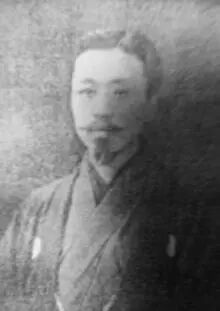
Mr. Mataji Kawakami
Matji Kawakami

History before Usui Sensei
Many consider Yoshio Usui, or Usui Sensei as we call him, to be the founder of Reiki, and the term Reiki only applies to the healing modalities he discovered and developed. However, when we examine the facts about the origins of Reiki as a healing modality, we discover that at least four other Reiki healing modalities existed in Japan before Usui Sensei developed his Reiki modality. This information comes from Hiroshi Doi and Toshitaka Mochitzuki, two Japanese Reiki researchers. The book “An Evidene Based History of Reiki” provides a more detailed understanding of this subject.
Interestingly, the reason why Usui Sensei chose this name may have been to indicate that he was aware that other forms of Reiki already existed, to indicate that this was his form of Reiki. While other forms of Reiki were less practiced or relatively unknown due to circumstances during World War II, Usui Reiki gradually became more popular due to its successors.

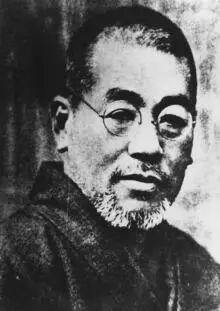
Usui Sensei
Founder of Reiki Healing System
Usui-sensei
Yoshio Usui, known as Mr. Usui to Japanese Reiki students, was born on August 15, 1865 in Tanai Village, Yamagata-gun, Gifu Prefecture, Japan, near present-day Nagoya, Japan.
He has a strong interest in learning and is committed to learning. When he was older, he traveled to Europe and China for further study. His studies included medicine, psychology, religion, and a skill that had long been valued by Asians - divination. Usui Sensei also became a member of a metaphysical group dedicated to cultivating spiritual abilities.
He has held many jobs, including as a civil servant, company employee and journalist, and has also helped prisoners rehabilitate themselves. Eventually, he became secretary to the Minister of Health and Welfare, Shinpei Goto, who later became the mayor of Tokyo.
The depth and breadth of his life experiences inspired him to focus on discovering the purpose of life. In the course of his exploration, he stumbled upon a description of a special state of consciousness that, once achieved, not only allowed one to understand the purpose of life but also guide one in achieving it. This special state is called “peace of mind and determination.” In this special state, no matter what happens in the external world, we begin to realize that we are always in a peaceful state within ourselves. It is from this peaceful state that we begin to realize and realize our life goals. The special characteristic of this state is that we can remain in it without any effort. This peaceful experience emerges naturally from within and is a state of enlightenment.
Mr. Usui understood this concept on an intellectual level and dedicated himself wholeheartedly to achieving this goal. This was considered an important step in Mr. Usui’s spiritual path. He found that the practice of sitting meditation was one of the ways to achieve peace of mind and a happy life. Therefore, he found a Zen teacher, became his disciple, and began to practice zazen. After three years of practice, he was not successful, so he tried to seek further guidance. His teacher advised him to take a more drastic approach and be willing to sacrifice his life in order to achieve peace of mind.
With this thought in mind, he prepared for his own death. In February 1922, he went to Mount Kurama, a sacred mountain north of Kyoto. But Usui Sensei misunderstood what his Zen master had suggested. He thought he had to die, not just wanted to die. So, for this reason, he decided to practice fasting meditation until he died and entered the next world. We must remember that he was not looking for a way to heal, but for the experience of this special spiritual state. Furthermore, we know that there is a small waterfall on Mount Kurama where people meditate even today. This meditation involves standing under a waterfall and letting the water rush over your head, which is said to activate the crown chakra. Japanese Reiki masters believe that Usui Sensei may have made this meditation part of his practice. Regardless, he grew weaker and weaker as time went on. Just in March 1922, at midnight on the 21st day of his meditation, he stood up and a bright light suddenly entered his brain from the top of his head, and he seemed to be struck by lightning. He fell and fell unconscious.
As the sun rose, he awoke and realized that, although he was weakened to the point of death by fasting, he was filled with a most delightful life force he had never experienced before. A magical high-frequency spiritual energy replaced his original consciousness, replaced by a magical new consciousness. He understood that he was the energy and consciousness of the universe, and that the special state of enlightenment he had sought became a gift from the universe. He was overjoyed by this realization.
When this state occurred, he was so excited that he couldn’t help but run down the mountain to inform his Zen master of his fate. On the way down, his toe stubbed a rock and he fell. Like anyone would do, he put his hand on his aching toe. As he did this, healing energy began to flow automatically from his hands. The pain in his toes gradually disappeared and the toes were healed. Mr. Usui was surprised by this. He realized that in addition to the dazzling experiences he had experienced, he had also been given the gift of healing. He also understood that this was his purpose in life: his purpose was to become a healer and to train others to become healers.
In April 1922, he moved to Tokyo and founded a healing society, which he named the Usui Reiki Healing Society. He also opened a Reiki clinic in Harajuku, Aoyama, Tokyo, where he held classes and provided treatments.
Initially, all Usui Sensei received was the energy of Reiki. Gradually, he developed his own Reiki system. Most of these developments occurred in the wake of the 1923 Great Kanto earthquake and tsunami, which caused widespread damage to Tokyo, killing more than 100,000 people and injuring more than 1 million. With so many people in need of healing at the time, Usui Sensei decided he needed to do something to accelerate his ability to train teachers.
He also developed a formal method of spiritual initiation to make it easier for others to learn Reiki and become teachers. Mr. Usui’s philosophy is that the quality and effectiveness of Reiki energy in the universe is unlimited, and the common purpose of all students is to continually seek ways to improve the quality and effectiveness of the Reiki energy they channel.
He calls his healing system Shin-Shin Kai-Zen Usui Reiki Ryo-Ho (The Usui Reiki Treatment Method for Improvement of Body and Mind) or simply Usui Reiki.
The demand for Reiki became so great that Usui Sensei’s clinic was overwhelmed by demand, so in 1925 he built a larger clinic in Nakano, Tokyo, and his reputation as a healer spread throughout Japan. He began traveling so he could teach and treat more people. When Mr. Usui began to teach other teachers studying mystical tradition, he formalized the Reiki method to make it easier for novice teachers to impart Reiki to their students. As he traveled throughout Japan, he personally taught over 2,000 students and initiated 20 mystical students (including Mr. Chujiro Hayashi), giving each student the same understanding of Reiki, and he empowered them to teach and give spiritual instructions in the same way.
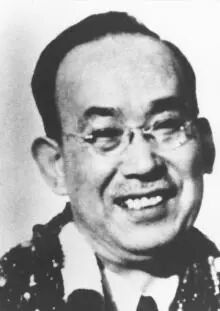
Mr. Hayashi Chujiro
Chrjiro Hayashi

Chongjiro Hayashi
Before Mr. Usui passed away, he asked Mr. Chujiro Hayashi to open his own Reiki clinic and develop Reiki therapy based on his previous experience as a military doctor in the Navy. Inspired by Usui Sensei’s request, Kobayashi Sensei opened a school and clinic called Kobayashi Reiki Research Association. After the death of Usui Sensei, he also left the academy.
At his clinic in Tokyo, he carefully records all diseases and conditions of his Reiki patients. He also keeps records of the Reiki hand positions best suited to treat each disease and condition. From these records, he created the Guidelines for the Reiki Healing Method, or Guidelines for the Reiki Healing Method, which were part of the course manual he gave to his students. This manual is only needed if the healer is unable to scan the glands. Many of his students work at his clinic in exchange for Reiki training.
Teacher Kobayashi also changed the way he gave Reiki. Mr. Kobayashi did not have the patient sit on a chair and be treated by one therapist like Mr. Usui. Instead, he had the patient lie on the treatment bed and receive treatment from several therapists at the same time. He also created a new, more effective system of spiritual initiations. Additionally, to enhance the value his students receive while he travels, he has developed a new method of teaching Reiki. Using this method, he was able to teach both the Initiate and the Upanishad levels in a five-day workshop. There will be two to three hours of teaching and one spiritual instruction each day. Following Usui’s approach, Kobayashi Sensei also encourages students to receive regular spiritual instruction from local teachers or teachers after completing his courses in order to continue to optimize and develop the quality of the Reiki energy they channel.
Because he traveled to Hawaii before the Japanese attack on Pearl Harbor in 1937-38, the Japanese military requested information from him on the location of Honolulu warehouses and other important military targets. He was called a traitor for refusing to do so. This “lost face” to him, which meant he had brought shame on himself and his family, and was ostracized by Japanese society. The only solution at that time was to commit seppuku. He died gloriously on May 11, 1940.
Afterwards, Teacher Kobayashi’s wife Chie Rinichi took over his clinic and ran it for a few years, but because there was no one to take over the position, the clinic closed. It is possible that Mr. Kobayashi’s tacitly approved students are still teaching, but most of them have also passed away. In 1999, it was discovered that Chiyoko Yamaguchi, Sensei Kobayashi’s mystical or master student, was still alive and practicing Reiki. She was inspired to start teaching. Chiyoko Yamaguchi died in 2003. Chiyoko Mikochi’s son, Tadao Yamaguchi, is currently teaching Reiki in Japan, which is the direct transmission of Reiki from Japan.

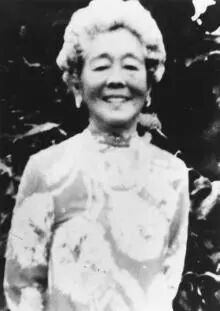
Hawayu Takada
Hawayo Takata
Takada Hawayu
Teacher Hawayu Takada was born on December 24, 1900 in Kauai, Hawaii. Her parents were Japanese immigrants, and her father worked in the sugar cane fields. She eventually married the bookkeeper at the farm where she worked. His name is Takada Saichi, and they have two daughters. In January 1930, Saichi died at the age of 34, leaving two children to be raised by Ms. Takada alone.
In order to support her family, she had to work very hard and around the clock. Five years later, she suffered from severe abdominal pain and lung disease, plus a nervous breakdown. Shortly after the death of one of her sisters, Takada-sensei was tasked with traveling to Japan, where her parents had settled, to deliver the news to them. She also felt she could get help with her health issues in Japan.
After notifying her parents to attend the funeral, she was hospitalized and reportedly diagnosed with tumors, gallstones, appendicitis and asthma. She was also told that she needed surgery, but she chose to go to Teacher Xiaolin’s clinic for treatment.
高田女士当时并不熟悉灵气,但因为诊所里的灵气疗愈师的诊断相吻合而印象深刻。 She began treatment at a clinic. She is treated by two therapists every day.她说,他们的手非常热,以至于她以为他们秘密使用某种设备。她看到其中一位疗愈师穿着大袖子的日本和服,她以为自己找到了隐藏秘密设备之处。有一天,她突然抓住疗愈师的大袖子,让疗愈师大吃一惊,但她却一无所获。当她解释自己的想法时,疗愈师大笑到从椅子上摔下来。 At this time, Mr. Hayashi Chujiro entered the clinic from another room. After knowing Ms. Takada’s doubts, he smiled and explained to her Reiki and how it works.
Ms. Takada’s condition gradually improved and she fully recovered four months later. She also wanted to learn Reiki herself. In the spring of 1936, she learned the first level of Reiki from Dr. Kobayashi. She then worked in his clinic for a year and also received Level 2 Reiki training. Ms. Takada returned to Hawaii in 1937, and shortly thereafter, Sensei Kobayashi also came to Hawaii to assist her in establishing Reiki there and to assist his daughter. In February 1938, Hawayu Takada accepted the initiation from Teacher Kobayashi and became a Reiki master.
Sensei Takada practiced Reiki in Hawaii and opened several clinics, including one in Hilo on the Big Island of Hawaii. She provides healing to people and also conducts enlightenment for Level 1 and Level 2 students. She became a well-known healer and also traveled to the continental United States and other parts of the world to teach and provide therapy. She is a powerful healer who attributes her success to the many Reiki sessions he performs on each case. She often conducts multiple sessions for patients, sometimes lasting several hours. She will practice treating difficult cases every day for several months until the patient is cured. To assist in the healing process, she often conducts initiations for family members of clients so that they can also perform Reiki on the clients.
Takada Sensei has her own unique way of practicing and teaching Reiki that is very different from Usui Sensei and Kobayashi Sensei’s approach. The late John Harvey Gray was one of Takada Sensei’s most respected students, in fact she once stated that he (Gray) should have been one of the three Reiki masters to inherit her work upon her retirement. In his Reiki book, he also states that Takada Sensei changed the way she taught Reiki because she said the Japanese style was too complex and difficult for Westerners to learn. With this in mind, she simplified her Reiki system. It includes a system of hand positions she developed herself, which she calls foundation treatment. This includes eight manual positions on the abdomen, shoulders and head. If the case requires, she will also add some additional manipulation techniques on the back. This is very different from the practice of Usui Sensei and Kobayashi Sensei, who used disease gland scanning as a method to find the best hand position for treatment. They believe that after receiving continuous spiritual teaching practice, disease gland scanning is the most important practical technology that students need to master. However, Takada-sensei never taught this technique. She also never taught any of the other methods used by Usui Sensei and Kobayashi Sensei, such as gassho meditation, spiritual revelation, dry bathing, gazing, exhalation, etc. In addition, she has different spiritual teaching methods for each level of Reiki course. She tells her students that spiritual teaching can give the symbols power, and also teaches the master symbols to the master-level students. Her system must use the Master Symbols for spiritual initiations and may also be used for healing purposes during Reiki healing sessions. Different from the advice of Usui Sensei and Kobayashi, she also did not encourage her students to receive as many spiritual initiations as possible. What she taught was that only four spiritual initiations for the first level of Reiki, one or two spiritual initiations for the second level of Reiki, and one spiritual initiation for the master level were necessary.
The simplified system taught by Mrs. Takada is very effective and has been proven to produce very valuable results for her students and cases. Takada Sensei can be considered an important innovator of Usui Reiki.
Another innovation that Takada Sensei also brought to the practice of Reiki was that she added a Master Symbol to Reiki. Before her, neither Mr. Usui nor Mr. Kobayashi used the Master Symbol. However, according to Reiki author Robert Fueston’s interviews with Reiki masters initiated by Sensei Takada, masters who received initiations from her before 1975 did not have a master symbol, while masters who received initiations after 1975 did. Therefore, it can be inferred from these facts that she must have been the one who added the Master Symbols to the Reiki practice.
Another thing worth understanding is that if it weren’t for Takada Sensei, Reiki would likely have fallen into obscurity and no one around the world would practice Reiki anymore; even in Japan, Reiki would be virtually unknown. This is because after World War II, the United States demanded Japan’s unconditional surrender, which gave the United States complete control over Japan. The United States requires Japan to hold a license for everyone practicing any treatment. Some healing groups did apply for licenses, but the Usui Reiki Society decided they didn’t want to be beholden to a licensing board, so they chose to go underground. They also decided that members of the Society were not allowed to discuss Reiki with anyone outside the Society, but could only practice Reiki with each other. This makes it difficult for anyone to find Reiki in Japan, including the Japanese. In addition, since it is very difficult for new members to join, the number of members has gradually decreased. This problem still exists today, so the membership of the society continues to slowly decrease. If this continues, the Society may come to an end in the near future.
Because Sensei Takada returned to Hawaii after studying Reiki in Japan and began teaching Reiki before World War II, she saved Reiki from being lost. She is a great Reiki teacher and promoter, teaching Reiki classes in Hawaii and many locations throughout the continental United States. Before her death, she taught a total of 22 Reiki masters who passed on to her.
The continued development of Reiki
Teacher Takada requires all students who receive her master-level training to pay a tuition fee of $10,000. She said it was a required fee and if you didn’t charge it then you shouldn’t be teaching Usui Reiki. The fee is not based on the time or quality of the training she provides, and the training does not include apprenticeships. None of her master level students recorded actual hours of master level training, except for Bethel Phaigh who said she received two stages of training, Level 2 and Master Level, within a few days. According to Bethel Fife, the purpose of high tuition is to instill in students a respect for the master class. However, the high tuition fees and the tendency of Mr. Takada’s master students not to accept many master students have resulted in the promotion of Reiki being very slow.
Iris Ishikuro is one of Takada Sensei’s master students, and Iris has also received training from other healers. She is also involved in the Johrei Fellowship, a religious group that uses their hands to emit healing energy. She also learned other healing modalities from her sisters who worked at a Tibetan temple in Hawaii. After Takada-sensei passed away in 1980, Alice decided to follow her own inner guidance and charge more reasonable tuition. As far as I know, she is the only one of the 22 master-level students who have received the inheritance of Takada Sensei to do so. Other students continue to charge high tuition fees to teach master classes.
Ishiguro Alice only trained two master-level students. One is Arthur Robertson and the other is her daughter Ruby. She also asked them to charge reasonable tuition fees. Ruby decided not to teach Reiki. However, Arthur Robertson began teaching in the mid-1980s, charging tuition of $500. Reasonable tuition allows more students to become Reiki masters. He began offering master training to 10 to 30 students in each class. Those masters taught by Arthur Robertson also trained other masters, so the number of master classes offered increased rapidly.
Because Ishiguro Alice ignored the tuition restrictions set by Takada Sensei for Reiki, she became a conduit for Reiki to spread faster, eventually spreading Reiki around the world. It is highly likely that most of the Reiki people in the world can trace their lineage back to Ishiguro Alice.
Arthur Robertson was also a teacher of Tibetan shamans and he learned a healing method using initiations using several symbols and similar spiritual teachings. This method has similarities to Usui Reiki.
After he became a Reiki Master, he developed an alternative Reiki style that combined Tibetan healing methods with Usui Reiki. The Tibetan shamanic section uses two Tibetan symbols, one of which serves as the master symbol, and the violet breath. It also incorporates the three symbols of Usui Reiki Okuden. He called this system Raku Kei. Arthur Robertson taught the Usui system of the Takata style and Raku Kei, and he taught these two different courses separately.
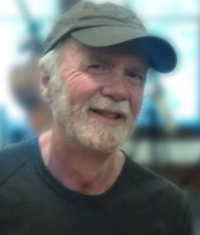
William Lee Rand
Founder of Holy Fire Reiki

William Lee Rand
My first Reiki teacher was Diane McCumber. Diane McCumber learned Reiki from Arthur Robertson and was taught both the Takata style Usui system and the Raku Kei system. I learned in March 1989 from Diane McCumber, who primarily taught the Raku Kei system. Later that year, he also learned the Usui system from Marlene Schilike (who also studied under Arthur Robertson).
By combining the Usui and Raku Kei systems, I developed the Usui/Tibetan system of Reiki. This system retains the four Usui symbols taught by Takada Sensei and adds the Tibetan symbols and “Violet Breathing Technique” taught by Arthur Robertson. I taught this system in my first Reiki class I started teaching in June 1989 and continued until 2013.
In January 2014, while I was in therapy, I became aware of the emergence of a healing energy that was more subtle than anything I had ever experienced and contained a higher consciousness. During the healing, I was given symbols and teachings, and I was told that I would be teaching this new energy as part of the Advanced Reiki Training/Masterclass course, which started the next day at the beginning. The energy I experienced was so clear and powerful that I firmly believed what I was told and followed that instruction. This energy guided me through what was then my first teaching experience.
Tibetan Master Symbol from Tibetan Symbols Lesson, Tibetan Fire Serpent
and violet breath were replaced by Holy Fire®. All Usui symbols are retained, including Power, Mind/Emotions, Distance and Master symbols. The process of spiritual initiation was changed to the master level ignition, and then I received another placement program for Reiki Levels 1 and 2 and the first part of the master level. The way this energy is transferred is noticeably different, with very little interaction between teacher and student, yet it produces a magical effect. The students all had a meaningful healing experience and were delighted to be involved in something so new and rewarding. This system is easier to learn, teach, and more effective than any healing modality we know of.
Since then, I have been teaching Usui/Holy Fire® (Usui/Holy Fire) Reiki courses. It has now developed to the third version, which has a higher frequency and more powerful healing energy.
END
"
joya
joya is the founder of Full Moon Phoenix Society, a cosmic nature witch, Kurak Akuyek (fourth-level Paq’o and wisdom keeper), Misha Carrier, and manifestation coach.
She began studying mysticism in 2012 and has taught mysticism for more than six years. Her systems include pendulum healing, Rune / Runes / Lu’en rune mastery, Rider-Waite and Thoth tarot reading, Lenormand tarot reading, Usui / Holy Fire Reiki teaching, angel healing, angel Reiki teaching, crystal healing, crystal Reiki teaching, Akashic healing, Sub maker subconscious audio production, PGM research, and many other Eastern and Western mystical systems.
She has supported 5000+ cases, specializing in money, abundance, relationships, love, and emotional healing themes, using multiple spiritual healing methods to help clients manifest their wishes.
【Tarot】She studied the modern Golden Dawn Kabbalah tarot system (Rider-Waite / Thoth) with teachers including Lon, and studied Rana-system Lenormand with Rana.
【Reiki】She studied with William, founder of Usui / Holy Fire Reiki, and many international Reiki masters. She has learned nearly one hundred niche Reiki systems, including Shamballa Reiki, Angel Reiki, Crystal Reiki, Money Reiki, Abundance Reiki, Tulip Reiki, and more.
【Shamanism】She studied shamanic healing systems with Alberto Villoldo Ph.D. and Andean traditions. In the Inca tradition, joya is Kurak Akuyek (fourth-level Paq’o and wisdom keeper) and Misha Carrier.
【Witchcraft】She studied many Witch / Wicca courses internationally, and ultimately chose to study modern Witchcraft practice with a senior hereditary American witch with more than 30 years of experience, maintaining regular online exchanges.
【Healing】She has studied many Western body-mind-spirit healing systems, including angel, crystal, Akashic, and pendulum systems.
【Art Aesthetics】She studied KDCA essential oil perfumery, KCCA scented candle, and all-round incense-making courses, and became an instructor. Pendulum Healer CTA Certified Tarot Reader
ICRT Certified Reiki Master "

Full Moon Order of the Phoenix
Scan the QR code ╳ Follow us
WeChat ID|emmua520
Public account|Full Moon Phoenix Order