#PowerAnimal丨The symbolic meaning of the peacock


We are interacting with everything in the universe all the time, even if we are not aware of it. However, as time passes, our sacred connection with nature fades. We seem to have forgotten how to truly feel nature, understand the information conveyed by nature, and the true meaning of living in harmony with nature. Only a few possess this sacred knowledge, and they can lead us to pay more attention to our spiritual world. Learning to act in accordance with the laws of the universe is not easy, but it makes our lives more meaningful and fulfilling. One way to reconnect with nature is to develop intuition and observation to better understand nature’s messengers.
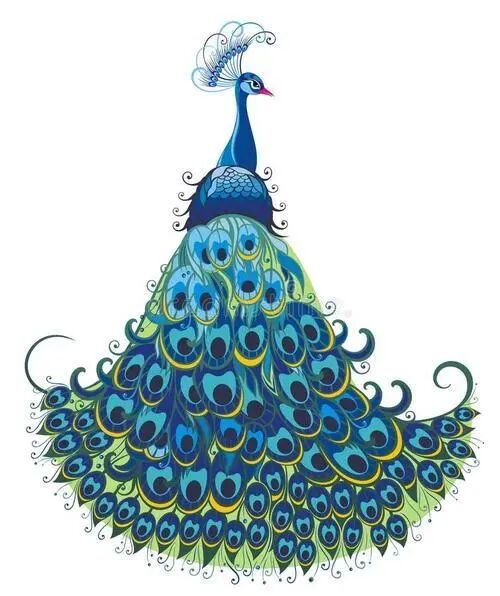
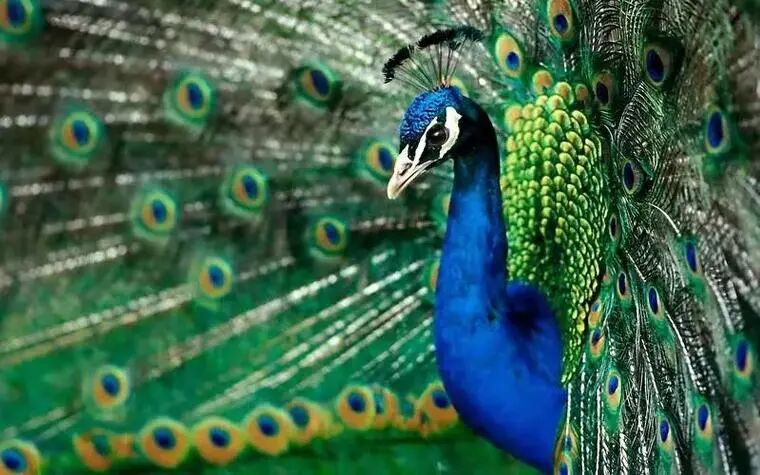
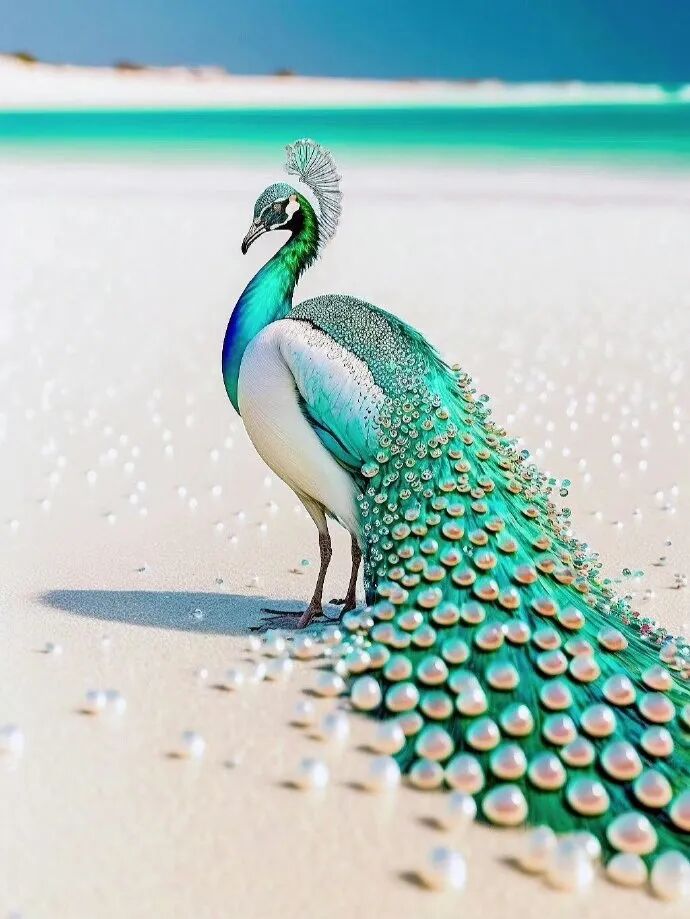
The peacock is a proud, beautiful and vain animal. They behave gracefully and know their own worth. Most of the time, peacocks were loved by royalty, which is one of the reasons why they are considered a symbol of luxurious living. Their colorful feathers not only show their beauty and vanity, but are also the criteria for choosing their mates. One might say that the peacock appears superficial and self-centered due to its narcissistic nature.


As a power animal

If you are associated with the peacock totem, then you are likely to be goal-oriented, beautiful and noble, majestic, respectable, confident, mentally strong, and highly respected in society.
In India, people believe that peacocks can predict rainfall and will dance whenever rain is about to come.
In India, the peacock also symbolizes support. In the Far East, the peacock is associated with the Bodhisattva Avalokitesvara.
Legend has it that Guanyin Bodhisattva created the peacock to protect the earth and maintain peace.
The ancient Greeks associated the peacock with the goddess Hera. The peacock was sacred to Hera, and anyone who disrespected the peacock would be severely punished.
From an evolutionary perspective, the peacock has always lived on land, which means that it represents the “earth” element and has the qualities of perseverance, clear goals, stability, reliability, pragmatism and protection. In addition, the connection with the “earth” element also gives the peacock a pursuit of beauty and balance. The element “earth” not only represents stability but is also associated with all art, joie de vivre and aesthetics.
Peacocks bring beauty and elegance to our lives. It is a gentle and charming creature that is always stunning in its appearance. Peacock can teach you that you don’t need to change yourself, you have to bravely accept your true self. This may sound difficult, but with the right guidance, you will learn to love yourself completely and appreciate all that you are every day.
Peacocks are proud of who they are, they are brave enough to express themselves and feel comfortable being themselves. This is enough to inspire us to look at ourselves, discover the unique and irreplaceable parts of ourselves, and bring them to light. When you fully understand yourself and learn to appreciate even those personality traits that you don’t particularly like, you can begin to appreciate yourself. Understanding yourself is only the first step, accepting your dark side is the difficult part. The peacock totem can guide you on the path to complete and sincere self-appreciation.
It’s often easier and safer to blend in with a group, being unobtrusive was a survival strategy during evolution, and many animals still have protective coloration today. However, this was never Peacock’s goal. Peacocks are confident in themselves and their instincts tell them that they are protected, so they are never afraid to be their true selves.
Peacock represents: beauty, elegance, protection, bravery, peace, nobility, charm and truth.

Positive Power of Power Animals

beauty
The peacock has always been a symbol of beauty and lightness, with a quality that delights the senses or the heart. For some, it may be the physical appeal; for others, it’s the hidden meaning and symbolism behind it. There is no doubt that peacocks have fascinated us for centuries.
The peacock can lead you to the path of self-love and self-appreciation, and it will make you boldly express yourself. When you feel confident in your uniqueness, there will be no more self-doubt and shyness. When we understand that we are unique, we can embrace all of our qualities.
In other words, peacocks teach us that beauty comes from within. Our attitude, behavior and essence, not just our appearance, is what makes us beautiful. If you have trouble accepting all of your qualities and are struggling to become confident, the Peacock Totem will be your guiding star.
Protect
The peacock totem is believed to ward off evil. Because the peacock feeds on snakes, it has historically been associated with the image of a guardian. It protects you from danger, pain, or discomfort. There is an aura of nobility surrounding the peacock that makes you feel like it will lead you with grace and determination, like a leader. You can trust this totem. Under its protection, no harm can come close to you. Even the Greek goddess Hera had the peacock as her guardian, and the peacock was closely associated with her.
noble
Peacock totems are associated with the royal family as they can often be seen in palace gardens. This is one of the reasons why the peacock is considered an extraordinary creature and not everyone has the opportunity to see it. This special animal knows that it doesn’t appear in public, and only a select few can get close to it.
reality
The Peacock Totem will help you find the strength to stand up for what you truly believe in. First, you need to know yourself. Setting boundaries is an important step, and this is only possible when you are clear about your priorities and goals. Next, stand proudly for what you truly believe in your heart. If you don’t love yourself, it’s hard to be yourself without reservation and authenticity.

Negative Power of Power Animals

vanity
If your vanity manifests itself as an excessive focus on achievement, you may constantly pursue expensive brands to prove your worth and success; if the focus is on appearance, you may be attracted to flashy clothes, thinking they will make you look better.
In either case, you need outside recognition to prove your worth. However, when you learn to truly appreciate yourself, all of this will seem superficial and unnecessary.
conceited
Similar to vanity, conceit is a character trait a peacock may possess. Vanity is defined as excessive pride and an overestimation of one’s own merits and abilities. Similarly, conceited people believe that others think highly of them simply because they feel they are superior to others. You have to remember that no matter how unique you are, you are just as important as everyone else.
To maintain balance in the universe, we must recognize everyone’s contribution. Sometimes we naturally think that we are more deserving than others, or wonder why others are luckier than us. At such times, we need to remind ourselves that everything has a divine purpose and that we are exactly where we are supposed to be and who we are supposed to be.

As an animal totem

Owning a peacock totem reminds you to live authentically, love yourself unconditionally and show it with pride, stay calm and trust the universe, and discover your inner strength, just like the ancient rulers once did.
If you want to express something about the peacock, surround it with items related to it, such as jewelry, artwork, symbols, words, or anything else that you associate with the peacock.
Placing a peacock totem in your home can bring you beauty, protection, grace, peace, sanctity, authenticity and confidence. Seeing it often will help you become more confident.


Seek help from a power animal

The peacock represents the “earth” element and you can go anywhere that allows you to connect with nature. Here’s a simple guided meditation if you want to do it in the comfort of your own home. The most effective way to communicate with a totem is through visualization and listening to your intuition. This meditation can help you feel its energy.
Easy Ways to Reconnect with the Peacock Totem
First of all, we must find the “earth” element within ourselves, which represents all solid and resilient substances and entities. Imagine you are walking in the wilderness and feel every emotion in your body, the different physical sensations, and the interaction of your body with the physical world. Try to engage in focused observation and feel what it feels like to be alive in this physical space, how the field makes you feel, and how you interact with each other. Take some time to appreciate your body for all it does to keep you alive and for all the amazing senses it gives you.
Peacock teaches us how to be more grounded, and the stability you find becomes the motivation to pursue your wildest dreams and goals. Only with this foundation can you begin to understand the path you need to take before becoming your authentic self. Similarly, the proud and somewhat vain peacock has also gone through such a process, and what we see now is just the result of its efforts.
Like the peacock, we still have a long way to go before we can move forward with confidence and grace. However, this totem will guide and protect you on your life path.
How do totems appear?
The peacock totem carries messages from other spiritual realms, and as such, communicates in a way that is completely different from any language known to us. This is why we often ignore some of their information because we are not used to being exposed to such information. However, once we learn to discern, we can interpret the information.
There are many ways to do this, such as paying attention to when and where you see peacocks, which can help narrow down the meaning of the message.
The peacock totem can manifest in different ways. The most common way it appears is in your dreams, visions, and real-life situations. Although seeing a peacock is not common in reality, it is possible. Maybe it’s not as random as appearing in a dream, but it’s still an effective way to do it. It can appear in any form and does not have to be the actual peacock itself. The possibilities are endless, such as seeing it in a work of art, reading about it, hearing about it in the news or in casual chat, seeing a peacock pattern on clothing, someone mentioning it out of the blue, or receiving a gift of a peacock totem. Anything you can associate with a peacock is probably its way of communicating with you. When you learn to observe and listen, your totem will convey its message in the most perfect way.

Dream

Interpreting the meaning of a peacock in a dream is the same as understanding the message it conveys in reality. The meaning of dreams varies from person to person and only you can fully understand it. The most accurate guide is your intuition and observation. Your feelings during the dream and after waking up will help you interpret the message.
Here are some examples of possible dream meanings:
Dreaming about a peacock flying back to its nest indicates that you will have good luck soon.
Dreaming about a peacock in a cage may mean limitations and wisdom.
Dreaming about particularly gorgeous peacock feathers symbolizes your appearance and expresses your view of yourself.
Dreaming about a peacock symbolizes a bright future and career development.
If you dream about injured peacocks, or are afraid of peacocks in your dreams, these dreams have negative connotations and may suggest that you have problems with success, or that you may be afraid of reaching your full potential.

Mythical Meaning

Bible: The peacock is mentioned in the Old Testament of the Bible and was part of King Solomon’s palace treasures. It symbolizes the majesty of God and represents the victory of spiritual efforts over evil. In the New Testament, the peacock still has a positive connotation, being a symbol of the resurrected Christ and victory over death, representing rebirth, loyalty and faith.
“The Young Naturalist’s Handbook of Birds, 1838”: Author Percy St. John mentioned that the Arabs considered the peacock an “unlucky bird.”
Roman times: The peacock was an important symbol, often representing funerals, death and resurrection.
Greek mythology: Legend has it that the peacock was conceived from the blood of the hundred-eyed giant Argus Panoptes. Later accounts say that Hera placed her eyes on the peacock’s tail after Argos’ death, or transformed Argos into a peacock. The peacock has always been a special bird to Hera.
Indian Mythology: “Mayura” means peacock in Sanskrit, and it is one of the sacred birds in Indian mythology. There are many legends in India related to peacocks. One of them is that the peacock was transformed from the feathers of the divine bird Garuda, the mount of Vishnu.
-Islamic legend: There is a story that the peacock fell out of favor and was expelled from heaven, after which its voice became hoarse and unpleasant.
- China: In ancient China, peacock feathers were awarded to soldiers in the military as a symbolic honor for their service to the country. In culture, peacocks are also associated with power, hierarchy, beauty and sanctity, and it is believed that peacocks are actually phoenixes that descend to earth.

The following content is excerpted from “Messages from the Animal Kingdom”

PEACOCK
Focus: Recovery and Wise Insight (Alertness)
Strength cycle: spring, autumn
Peacocks have inspired legends and myths in every society, and their beautiful plumage dazzles everyone who sees them. Like many birds, male birds have brighter and more gorgeous feathers, but female peacocks are also special and great in their own way. They are very protective and powerful birds.
Perhaps the two most distinctive features of the peacock are its feathers and its odd, piercing cry. Their call is a bit like laughter, as if the peacock is reminding you to smile more. I once heard a story that said that peacocks’ cries are related to their feet. Peacocks’ feet are ugly, so the story says that every time they see their own feet, the peacock will scream.
Those who have a peacock totem should examine the mystical symbolism of their feet. The feet are our support system and the foundation of the human body structure, allowing us to move and stand upright. What do peacock’s feet say about your life? The examination and use of foot reflexology will help those with peacock totems understand this.
Peacock feathers have always been used in rituals or as decoration, and the color and pattern of their feathers show why peacocks are associated with this mysticism. The lustrous blue-green gold feathers are awe-inspiring. A touch of blue-green is usually associated with loyalty, and the “eyes” on the feathers are often associated with profound insight and wisdom.
This expression of vigilance can be found in Greek mythology. Argus, the one-hundred-eyed giant who was the guardian of the goddess Hera, fell asleep while guarding and was executed. Hera then set his eyes on the peacock, her favorite bird.
Of all birds, the peacock is most traditionally depicted with the phoenix, the legendary bird of resurrection, bathed in the fire of life and then rising from the ashes. The peacock, as the reflection of the phoenix, has influenced many societies. In Chinese mythology, the peacock’s feathers have a blend of five colors, thus representing joy and harmony.
In Egypt, the peacock is associated with the worship of the sun god Amon-Ra: even in Christianity, the peacock symbolizes the death and rebirth of Christ; the Egyptians associate the peacock with the eyes of Horus; while for the Hindus, the peacock is associated with the thunder god Indra, who turned into a peacock in order to escape the demon Ravana and was given a hundred eyes on his feathers.
The peacock is considered sacred because it can kill poisonous snakes. In Egypt, its status is second only to the ibis. Because of the many eyes on the feather, it is associated with wisdom and foresight - the enlightenment of alertness. The peacock is also often associated with immortality, partly because its appearance is similar to depictions of the phoenix, and partly because ancient beliefs held that the peacock’s flesh was incorruptible.
Examining the various myths associated with this bird may reveal your past life encounters with this totem, allowing you to better understand the role the peacock totem will play in your life. Legends related to peacocks are always closely tied to their traits and behaviors, which helps you see how other societies draw connections and parallels.

What is your power animal?

Wondering what your power animal is? Do you want to seek help from power animals in your money, career, relationship, studies, etc.?


END

joya joya is the founder of Full Moon Phoenix Society, a cosmic nature witch, Kurak Akuyek (fourth-level Paq’o and wisdom keeper), Misha Carrier, and manifestation coach.
She began studying mysticism in 2012 and has taught mysticism for more than six years. Her systems include pendulum healing, Rune / Runes / Lu’en rune mastery, Rider-Waite and Thoth tarot reading, Lenormand tarot reading, Usui / Holy Fire Reiki teaching, angel healing, angel Reiki teaching, crystal healing, crystal Reiki teaching, Akashic healing, Sub maker subconscious audio production, PGM research, and many other Eastern and Western mystical systems.
She has supported 5000+ cases, specializing in money, abundance, relationships, love, and emotional healing themes, using multiple spiritual healing methods to help clients manifest their wishes.
【Tarot】She studied the modern Golden Dawn Kabbalah tarot system (Rider-Waite / Thoth) with teachers including Lon, and studied Rana-system Lenormand with Rana.
【Reiki】She studied with William, founder of Usui / Holy Fire Reiki, and many international Reiki masters. She has learned nearly one hundred niche Reiki systems, including Shamballa Reiki, Angel Reiki, Crystal Reiki, Money Reiki, Abundance Reiki, Tulip Reiki, and more.
【Shamanism】She studied shamanic healing systems with Alberto Villoldo Ph.D. and Andean traditions. In the Inca tradition, joya is Kurak Akuyek (fourth-level Paq’o and wisdom keeper) and Misha Carrier.
【Witchcraft】She studied many Witch / Wicca courses internationally, and ultimately chose to study modern Witchcraft practice with a senior hereditary American witch with more than 30 years of experience, maintaining regular online exchanges.
【Healing】She has studied many Western body-mind-spirit healing systems, including angel, crystal, Akashic, and pendulum systems.
【Art Aesthetics】She studied KDCA essential oil perfumery, KCCA scented candle, and all-round incense-making courses, and became an instructor. [Tarot] Learn the modern Golden Dawn Kabbalah system Tarot (Waite/Thoth) from famous domestic and foreign teachers such as Lon, and learn the Rana system Lenoman from Rana.
[Reiki] Learn from William, the founder of Usui/Holy Fire Reiki, and many foreign Reiki masters, and learn nearly a hundred small varieties of Reiki, including Shambhala Reiki, Angel Reiki, Crystal Reiki, Money Reiki, Abundance Reiki, Tulip Reiki, etc.
【Shaman】Learn courses on shamanic healing systems such as Alberto Villoldo Ph.D. and Andean traditions. joya is the Kurak Akuyek (Fourth Level Paq’o and Wisdom Keeper), Misha Carrier in the Inca tradition.
[Witch] studied many Witch/Wicca and other courses abroad, and finally chose to learn modern Witchcraft practices with a senior hereditary American witch with more than 30 years of experience, and exchange experiences online regularly.
【Healing】Learn many Western mind-body and soul healing systems, including angels, crystals, Akashic, pendulum, etc.
[Art Aesthetics] Learn KDCA essential oil fragrance courses, KCCA scented candles and all-round fragrance making courses, and become a mentor. [Online Occult Courses] joya teaches the following courses based on a summary of what she has learned:
The series of healing courses: including Shambhala Reiki, Perfect Money Reiki Course (formerly Money Reiki), Perfect Relationship Reiki Course (formerly Love Reiki), Unicorn Reiki, Purple Fire Reiki, Angel Reiki, Pendulum Healing, Angel Healing, and Western Usui Reiki series courses (available offline).
Magical Road series of courses, including magical witches, magical candles, magical elves, magical runes, magical runes, magical planets, etc.
A series of courses on the art of prediction: modern Waite Tarot, astrological dice and other courses.
The beauty of art series courses: essential oil fragrance, all-round incense making, scented candles, etc. (offline available).
Inca Journey Series Courses: Inca Four Directions Medicine Wheel, Inca Munay-Ki Ten Ceremony, Inca Blessing Package Ceremony, Andean Traditional Shaman Level 4, Andean Traditional Blessing Package Ceremony, etc.
"

"
WeChat| EMMUA520 Weibo| joya Xiaohongshu| joya joya