#joya Divination丨Poker Divination Prediction Tutorial #1: Basics


This is the first in a series of posts about playing cards as an amazing tool. Begins by explaining my personal system of card divination, along with some of the variations and influences that have shaped my practice. I am not going to delve into the extensive history of playing cards or tarot cards, as these topics are well covered and documented in other sources. However, some sometimes-missed history (particularly regarding playing cards) might be worth mentioning.
While the absolute origin of the hieroglyphic plaques is unknown, many believe they came from India, China or Turkey, or from the traveling Romany (also often referred to as “Gypsies”). It is known that by the 16th century, playing cards were extremely popular among the lower classes and were often cited as a vice in clerical and government documents across Europe. They were widely admired by the highest levels, including Emperor Rudolf II of Bohemia and Madame Lenormand, Napoleon’s spiritual adviser. However, cards were also almost always popular among the lower classes. Cards came to America with settlers, sailors, and soldiers. In fact, in the late 18th century, a popular ballad called “The Soldier’s Prayer-Book” used biblical metaphors to describe, among other things, the suits and colors of playing cards. For example, five represents the five wounds of Christ, nine represents the nine lepers Jesus healed, and ten represents the Ten Commandments. While the song may be a whitewash for gambling soldiers eager to retain one of the few portable amusements they were allowed to engage in, it does capture an important point: playing cards are an excellent tool for metaphorical interpretation.
So why playing cards and not Tarot? On the one hand, playing cards have become more or less accessible and versatile since the 17th century. The cards you use to play blackjack one day can be used to reveal the future the next day. They also travel in your pocket and are easily replaced if torn or damaged. Planters in the antebellum South generally did not value slaves possessing a deck of playing cards to amuse themselves in the few free moments they had (although in some places stricter masters prohibited them altogether). William Wells Brown provided a slave story for a character named “Uncle Frank” who claimed that every plantation had at least one fortune teller, at least rarely with playing cards. Today, playing cards are an excellent form of divination, even in plain sight. No one thinks it’s a big deal that two people sit at a table full of diamonds, spades, clubs, and hearts, whereas a Devil or Death card might raise eyebrows.
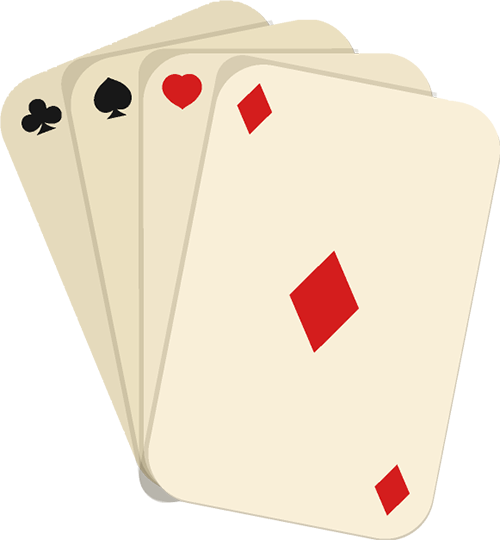
I have categorized the main meanings of the cards by color and suit. However, unlike many other practitioners, I do not attribute these decks to tarot or elemental properties. Of course, there is some connection, as both Hearts and Cups indicate emotion-based interpretations, but it is not a fixed connection.

Deck Meaning
Black cards represent a “no” or “no” answer, while red cards represent a “yes” or “yes” answer. This is most important in a brief interpretation and will be discussed in detail later. Some would say that having more black cards than red cards is a negative sign, but honestly, in my opinion, the only truly “negative” card in the extended reading is the spade. For me, I look at the deck the following way:
Heart♥: Family, friends, love and lovers. There are also emotions and deeply felt things.
Plum blossom ♣: work and business. One’s “calling” or destiny. There are also conflicts, discussions and debates.
Diamond ♦: money, luck, wealth, happiness. Also news, letters and socializing.
Spades ♠: Tears, pain, sorrow. War, fighting, violence. There are also changes, warnings, and doubts/fear.
As I break down each card, I gain a deeper understanding of each card. If I see a lot of diamonds and clubs, I know someone has some good work and he or she will be well compensated for going around the bend. All hearts mean that the querent is emotionally invested in the reading, or that he or she is dealing with deep family or friendship issues. Spades and clubs together are a sign that the questioner’s job may be in jeopardy, or that the job is very unfulfilling for him or her.

Numbers and Court Cards
There are many different systems for interpreting number and court cards. Some are fairly simple, and some are very detailed, looking at the meanings of astrology and numerology in the context of kabala lore and ritual magic. I’m not a particularly good ritual magician, so I tend to use a fairly simple system that focuses on the key concepts associated with each number.
ace – beginning, main or isolated thing
Two: In pairs, lovers, exchange
Three: Growth, Hope
Four: Decision, stagnation, choice
Five: Combinations, Physical Stuff, Gain/Loss
Six: Path
Seven: Symbol card*, inversion, trouble
Eight: Talk, idea
Nine: Patience, ambition, expansion
Ten: completion, ending
Jacks: youth, children, news, gaze
Queens: woman or a specific woman, beauties, mothers, nurses, teachers
Kings: a man or a specific man, wisdom, age, power, “Judges”
“Token” cards: The 7 of each suit represents the most concentrated form of that suit. Often, this intensity has some negative connotations. However, this doesn’t necessarily mean it’s all good or all bad. For example, the 7 of spades might mean “tears” as a miniature card, but if those tears are near many red cards, they could be tears of joy. *
Number combinations can also lead to a certain amount of interpretation. For example, if you have several 3s and 9s, this will lead you to a reading about opportunity and very rapid growth (since both cards are about growth/expansion). Sevens, fives, and fours can represent poor choices and the losses those choices bring. The combination of Six and King may mean that a teacher or elder will help guide the questioner in a new direction.
Court cards (or “flower cards”) also have a power that number cards don’t have. I sometimes use aces as a flower card, but it really depends on the deck and the number of other flower cards around it. It’s a bit like mental blackjack: it can be the highest or lowest value, depending on the other cards. Other flower cards often represent significant events in the lives of specific people or subjects.
A king and a queen wearing the same clothes can often represent “parents” or parental guidance, which shaped the questioner’s life. You’ll see more when we delve into these later, but for now just know that the court cards, aces, and 7 all mean “pay attention to the reading,” and there are some divination systems that remove the Queens from the cards before reading them. This dates back to a European practice based on specific cards, but don’t be surprised if you don’t see them in someone’s reading.
Finally, a word about the royals. There are two special royals in my divination system: the King and Queen of Hearts. Depending on the client’s gender, one of these cards will represent him or her (a man represents a king, a woman represents a queen). We’ll see how it works later, though.
Of course, all of these interpretations have deep connections to the decks and their place in the reading.
E
N
D

Online courses
Backend reply 【888】How to activate the sigil.

Backstage reply [666] Get joya’s practical money wishing skills.

Backstage reply [111] Receive the pendulum healing digital menu designed by joya.

Backstage reply [333] to receive the Holy Acceleration Prayer for joya’s personal use.